


Dehydration and malnutrition in nursing homes can be serious warning signs when a resident is not receiving enough food, fluids, monitoring, assistance, or medical response. These issues may involve weight loss, weakness, confusion, infections, falls, pressure injuries, hospitalization, or preventable decline. Families reviewing possible care failures may use a nursing home negligence lawyer Long Island resource to understand how nutrition records, hydration monitoring, facility duties, and resident harm are generally evaluated.
Quick Answer
Dehydration or malnutrition may suggest nursing home negligence when evidence shows that the facility failed to assess the resident’s needs, follow the care plan, assist with eating or drinking, monitor weight loss, track fluid intake, respond to swallowing problems, notify medical providers, or address visible decline. Important evidence may include care plans, meal intake records, fluid logs, weight records, dietician notes, nursing notes, lab results, hospital records, family observations, photos, and complaint records.
Key Takeaways
- Dehydration and malnutrition can lead to serious decline in vulnerable nursing home residents.
- Not every nutrition problem automatically proves neglect, but unexplained weight loss, poor intake, dry mouth, confusion, weakness, repeated infections, pressure injuries, or hospitalization may raise concerns.
- Federal nursing home food and nutrition rules include requirements involving resident needs, preferences, therapeutic diets, food safety, and fluids sufficient to maintain hydration. (Legal Information Institute)
- Care plans, meal logs, fluid records, weight charts, nursing notes, and hospital records are often central evidence.
- The New York State Department of Health investigates nursing home complaints involving abuse, neglect, mistreatment, incidents, and regulatory violations. (New York State Department of Health)
- Deadlines can vary depending on negligence, medical malpractice, wrongful death, and public entity issues.
- Families should document concerns early because records, symptoms, staff explanations, and resident condition can change quickly.
Why Nutrition and Hydration Matter in Nursing Homes
Food and fluid intake are basic parts of resident care. Many nursing home residents cannot simply prepare meals, refill drinks, open containers, recognize thirst, ask for help, or safely swallow without support. Others may have dementia, stroke history, dental problems, depression, infections, medication side effects, or mobility issues that reduce intake.
Dehydration and malnutrition can contribute to serious harm, including:
- Weakness
- Dizziness
- Falls
- Confusion
- Delirium
- Urinary tract infections
- Kidney problems
- Poor wound healing
- Pressure injuries
- Muscle loss
- Hospitalization
- Increased infection risk
- Functional decline
- Death in severe cases
A nutrition-related claim usually asks whether the facility recognized the resident’s risk, created an appropriate care plan, followed that plan, documented food and fluid intake, and responded when the resident began to decline.
What Is Malnutrition in a Nursing Home?
Malnutrition generally means the resident is not receiving or absorbing enough nutrition to support health. In a nursing home, this may involve too little food, poor meal assistance, difficulty swallowing, inadequate therapeutic diets, untreated dental pain, medication side effects, depression, illness, or failure to monitor weight loss.
Warning signs may include:
- Sudden or steady weight loss
- Loose clothing
- Weakness
- Fatigue
- Poor wound healing
- Dry or fragile skin
- Loss of muscle
- Reduced mobility
- Low appetite
- Confusion
- Frequent illness
- Decline after refusing meals
- Hospital transfer for poor intake or weakness
A resident may lose weight for medical reasons, but unexplained or poorly monitored weight loss should be reviewed carefully.
What Is Dehydration in a Nursing Home?
Dehydration occurs when the resident does not have enough fluid for normal body function. Nursing home residents may be at higher risk because they may not feel thirst clearly, may forget to drink, may have swallowing problems, may need assistance reaching drinks, or may avoid fluids because they fear incontinence or delayed toileting help.
Warning signs may include:
- Dry mouth
- Dark urine
- Low urine output
- Dizziness
- Weakness
- Confusion
- Rapid heart rate
- Low blood pressure
- Constipation
- Headache
- Lethargy
- Repeated urinary tract infections
- Hospital transfer for abnormal labs or dehydration
Hydration issues often overlap with staffing, toileting assistance, mobility support, and care plan follow-through.
Federal Food and Nutrition Requirements
Federal nursing home regulations address food and nutrition services. 42 CFR § 483.60 includes requirements related to staffing, menus, food and drink, therapeutic diets, food safety, and resident needs. The regulation also states that drinks, including water and other liquids, should be consistent with resident needs and preferences and sufficient to maintain resident hydration. (Legal Information Institute)
These rules do not automatically prove every civil injury claim. However, they help show why nutrition services, hydration support, dietary orders, and documentation may matter when a resident suffers unexplained decline.
A negligence review may consider whether the facility:
- Identified nutrition and hydration risks
- Followed physician or dietician orders
- Provided appropriate meal assistance
- Offered enough fluids
- Monitored weight and intake
- Responded to poor appetite
- Addressed swallowing or dental problems
- Communicated changes to doctors and family
- Documented care accurately
Not Every Weight Loss Event Proves Negligence
A resident may lose weight because of illness, cancer, advanced dementia, infection, depression, medication side effects, end-of-life decline, or other medical conditions. A dehydration or malnutrition concern does not automatically prove neglect.
However, the issue deserves careful review when the facility had warning signs and did not respond. Concerns may become stronger when there are missing meal records, repeated low intake, no care plan updates, unanswered family concerns, poor hydration monitoring, ignored swallowing problems, pressure injuries, infection, or hospitalization.
The key question is not only whether the resident declined. The key question is whether the decline was recognized, documented, communicated, and addressed with appropriate care.
Common Warning Signs Families May Notice
Families often notice changes before they see facility records. These observations should be written down with dates, times, staff names, and explanations given by the facility.
Possible warning signs include:
- Resident looks thinner
- Clothes or dentures no longer fit properly
- Trays are left untouched
- Drinks are out of reach
- Water pitcher is empty or not refilled
- Resident says they are hungry or thirsty
- Resident complains food is hard to chew
- Resident coughs or chokes while eating
- Staff rush meals or remove trays quickly
- Resident needs help eating but sits alone
- Repeated confusion or sleepiness
- Dry lips or dry mouth
- Sudden weakness
- New or worsening wounds
- Repeated infections
- Hospital transfer without clear explanation
These signs should not be ignored, especially when they appear together or worsen over time.
Care Plans for Nutrition and Hydration
A care plan should identify a resident’s risks and explain how staff will address them. If a resident needs help eating, a special diet, thickened liquids, supplements, swallowing precautions, or fluid monitoring, the care plan should reflect those needs.
A nutrition or hydration care plan may include:
- Meal assistance
- Feeding support
- Dietician review
- Weight monitoring
- Fluid intake tracking
- Therapeutic diet instructions
- Thickened liquids
- Swallowing precautions
- Dental evaluation
- Nutritional supplements
- Snack schedule
- Staff reminders to offer fluids
- Monitoring for meal refusal
- Physician notification steps
- Family communication
If the care plan identified a risk but facility records do not show follow-through, that may raise questions. For example, if a resident required assistance with meals but meal records show repeated poor intake without intervention, the chart may need closer review.
Meal Intake Records
Meal intake records can be important in malnutrition claims. These records may show how much of each meal the resident ate, whether meals were refused, whether supplements were offered, and whether staff documented concerns.
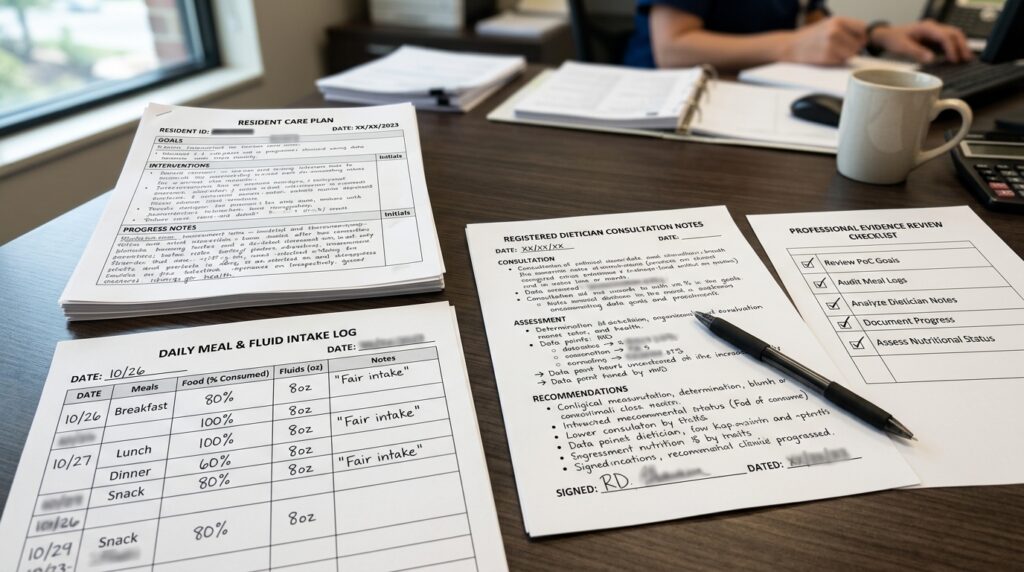
Important questions include:
- Was the resident eating less than usual?
- Did staff document poor intake?
- Were repeated refusals reported to nurses or physicians?
- Were supplements ordered?
- Was the resident weighed after intake dropped?
- Did the care plan change?
- Was a dietician involved?
- Was the family notified?
- Were there signs of depression, pain, dental problems, or swallowing difficulty?
Meal records should be compared with weight charts, nursing notes, dietician notes, and hospital records. A single form rarely tells the full story.
Fluid Intake Records
Fluid intake records may help show whether the resident received enough fluids and whether staff monitored hydration. These records are especially important when a resident has kidney concerns, infection risk, swallowing problems, fever, diarrhea, vomiting, or a history of dehydration.

Fluid records may include:
- Intake and output sheets
- Nursing flow sheets
- Hydration logs
- Meal tray fluid notes
- Medication pass fluids
- Physician orders
- Lab results
- Urine output notes
- Hospital records
A resident who needs help drinking may decline quickly if fluids are not offered consistently. If the chart shows dehydration but fluid monitoring is missing or incomplete, that may raise serious concerns.
Weight Records and Unexplained Weight Loss
Weight records are often central in malnutrition claims. Nursing homes usually track resident weight, but the frequency and response may depend on resident condition, physician orders, and care plan needs.
Important questions include:
- How much weight was lost?
- Over what period?
- Was the loss sudden or gradual?
- Was the resident weighed consistently?
- Were weight changes reported?
- Was the care plan updated?
- Were supplements ordered?
- Was a dietician consulted?
- Were swallowing, dental, depression, or medication issues reviewed?
- Did weight loss lead to weakness, falls, wounds, or hospitalization?
Unexplained weight loss can be a sign that the facility missed or ignored a developing problem.
Swallowing Problems and Choking Risks
Some residents have dysphagia, or difficulty swallowing. This can increase the risk of choking, aspiration, pneumonia, dehydration, and malnutrition. Swallowing problems may follow stroke, dementia, neurological disease, weakness, or hospitalization.
Evidence may include:
- Speech therapy evaluations
- Swallow studies
- Diet orders
- Thickened liquid orders
- Aspiration precautions
- Nursing notes
- Meal observation records
- Hospital records
- Family observations
- Incident reports involving choking or coughing
If a resident coughs during meals, pockets food, refuses thickened liquids, or develops repeated pneumonia, the facility may need to reassess the care plan and notify medical providers.
Dental, Pain, and Appetite Issues
A resident may stop eating because food is painful or difficult to chew. Dental problems, poorly fitting dentures, mouth sores, gum pain, dry mouth, medication side effects, depression, nausea, constipation, and untreated pain can all reduce intake.
Important questions include:
- Did staff ask why the resident was not eating?
- Were dentures checked?
- Was dental care requested?
- Was pain assessed?
- Were medication side effects reviewed?
- Was depression considered?
- Were preferred foods offered?
- Were meals served at the right texture and temperature?
- Were supplements or snacks provided?
A facility should not simply record poor intake over and over without asking why it is happening.
Staffing and Meal Assistance
Nutrition and hydration problems may reflect staffing issues. Some residents need time and physical assistance to eat or drink. If staff are rushed, understaffed, or poorly trained, residents may not receive needed help.
Meal assistance concerns may include:
- Resident left alone despite needing help
- Meals removed before the resident finished
- Staff rushing feeding
- Food placed out of reach
- Drinks placed out of reach
- Call bells not answered
- Resident not positioned properly for meals
- No assistance opening containers
- No staff monitoring for choking
- No encouragement or cueing for residents with dementia
Staffing records, assignment sheets, meal observations, family notes, and witness statements may help show whether assistance was actually provided.
Dehydration, Malnutrition, and Pressure Injuries
Nutrition and hydration problems can affect skin health and wound healing. A resident with poor intake may be more vulnerable to pressure injuries, infections, and slow recovery.
If a resident develops bedsores along with weight loss or dehydration, the claim may require review of multiple care systems. This may include repositioning records, wound care notes, meal logs, fluid intake records, weight records, lab results, and hospital records.
A broader guide to evidence for personal injury claims can help explain why records from different sources are often compared to understand causation and damages.
Hospital Records After Dehydration or Malnutrition
Hospital records can be very important because they may identify dehydration, malnutrition, abnormal labs, infection, kidney issues, weakness, confusion, or failure to thrive. These records may also conflict with nursing home explanations.

Hospital records may include:
- Emergency department notes
- Lab results
- Fluid treatment records
- Nutrition assessments
- Diagnosis codes
- Physician impressions
- Wound records
- Infection records
- Weight data
- Medication review
- Discharge instructions
- Recommendations for diet, supplements, or monitoring
Comparing hospital records with nursing home records can reveal whether the facility recognized the problem early enough.
Evidence That Can Strengthen a Dehydration or Malnutrition Claim
Dehydration and malnutrition claims are usually record-heavy. The strongest evidence often comes from comparing care plans, daily records, medical notes, and family observations.
Helpful evidence may include:
- Care plans
- Meal intake records
- Fluid intake records
- Weight records
- Nursing notes
- Dietician notes
- Physician orders
- Swallow evaluations
- Speech therapy records
- Medication records
- Lab results
- Hospital transfer records
- Emergency department records
- Family visit notes
- Photos showing visible decline
- Complaint records
- Staffing records
- Call bell records
- Facility policies
- Witness statements
The goal is to create a timeline showing what the facility knew, what it documented, what it did, and how the resident was affected.
Resident Rights and Nutrition Concerns
New York nursing home residents have rights involving dignity, respectful care, communication, records, and complaint procedures. The New York State Department of Health publishes resident rights information for nursing home residents and families, including the ability to file complaints and access information about rights and care. (New York State Department of Health)
Nutrition and hydration concerns may overlap with resident rights when a resident is not treated with dignity, is not helped with meals, is not given access to fluids, has concerns ignored, or experiences preventable decline.
Filing a Nursing Home Complaint in New York
Families may file a complaint with the New York State Department of Health when they believe a nursing home has failed to provide proper care. NYSDOH states that its Nursing Home and ICF/IID Surveillance program investigates complaints and incidents involving nursing homes in New York State that relate to state or federal regulatory violations. (New York State Department of Health)
A complaint may involve:
- Suspected neglect
- Poor meal assistance
- Dehydration concerns
- Weight loss concerns
- Poor hygiene
- Failure to respond to family concerns
- Medication issues affecting appetite
- Lack of medical response
- Resident rights concerns
- Hospital transfer after preventable decline
A regulatory complaint is not the same as a civil injury claim, but complaint records and facility responses may provide useful context.
Who May Be Responsible?
Responsibility may involve more than one person. Nutrition and hydration failures can result from poor staffing, weak supervision, poor documentation, lack of medical response, pharmacy issues, dietician issues, or failure to follow a care plan.
Potentially responsible parties may include:
- Nursing home operator
- Facility owner
- Management company
- Nurses
- Aides
- Dietician or nutrition services provider
- Physicians
- Speech therapy providers
- Pharmacy providers in limited situations
- Staffing agencies
- Contractors involved in food service or care
A claim may review whether the harm came from one mistake, repeated missed care, poor communication, understaffing, or facility-wide failure to monitor vulnerable residents.
What If the Facility Blames the Resident’s Health?
Facilities may argue that dehydration, malnutrition, or weight loss resulted from the resident’s age, illness, dementia, swallowing disorder, depression, or end-of-life condition. These facts may matter, but they do not automatically answer whether proper care was provided.
Important follow-up questions include:
- Was the condition known?
- Was the risk documented?
- Was the care plan updated?
- Were meals and fluids tracked?
- Were supplements ordered?
- Was a physician notified?
- Was a dietician consulted?
- Were swallowing problems evaluated?
- Were family concerns documented?
- Did hospital records show preventable decline?
A vulnerable resident may require more careful monitoring, not less.
Damages in Dehydration and Malnutrition Claims
Damages depend on the severity of harm, medical impact, and whether the decline was preventable.
Possible damages may include:
- Emergency care
- Hospitalization
- IV fluids
- Infection treatment
- Wound care
- Nutrition support
- Pain and suffering
- Weakness and loss of mobility
- Falls related to weakness
- Pressure injuries
- Cognitive decline
- Transfer to a higher level of care
- Emotional distress
- Wrongful death in severe cases
Medical review may be needed to connect poor intake or dehydration to the resident’s decline, injury, hospitalization, or death.
Deadlines for Dehydration and Malnutrition Claims in New York
Deadlines depend on the claim type, facility identity, injury timeline, and responsible parties. A nursing home malnutrition claim may involve negligence, medical malpractice, wrongful death, public entity rules, or a combination of issues.
If a public nursing home, public hospital, public corporation, or government-related facility is involved, shorter notice rules may apply. New York General Municipal Law § 50-e generally requires a notice of claim within 90 days for certain tort claims against public corporations. (Justia Law)
Because deadlines can vary, families should identify the facility owner, operator, claim type, dates of decline, hospital transfer dates, and any public entity connection as early as possible.
Common Mistakes in Dehydration and Malnutrition Cases
Some mistakes can make these claims harder to evaluate.
Common mistakes include:
- Not documenting visible weight loss
- Not asking for weight records
- Not requesting meal and fluid logs
- Not writing down family observations
- Not asking whether a care plan was updated
- Accepting vague explanations without records
- Not preserving hospital discharge papers
- Not documenting choking, coughing, or swallowing issues
- Waiting too long to request medical records
- Not filing a complaint when serious neglect is suspected
- Missing public entity notice deadlines
- Posting sensitive resident details online
A careful timeline can help show when the decline began, who was notified, and how the facility responded.
When Legal Guidance May Be Useful
Legal guidance may be useful when a resident experiences severe weight loss, dehydration, repeated infections, pressure injuries, hospitalization, weakness-related falls, failure to thrive, or death after questionable nursing home care.
These claims may require review of care plans, meal records, fluid logs, weight charts, dietician notes, nursing notes, lab results, hospital records, complaint history, staffing records, facility policies, expert opinions, and deadlines.
People researching local support may review a Farmingdale legal office location when looking for Long Island nursing home negligence claim information. Publicly available personal injury case results may also provide general context, although every case depends on its own records, injuries, facility conduct, and applicable law.
FAQs About Nursing Home Dehydration and Malnutrition
Is malnutrition always a sign of nursing home neglect?
No. Malnutrition does not automatically prove neglect. Some residents lose weight because of illness, swallowing problems, medication effects, or end-of-life decline. However, unexplained weight loss, poor documentation, ignored meal refusals, or failure to update the care plan may raise serious concerns.
What records are important in a nursing home malnutrition claim?
Important records may include care plans, meal intake logs, weight records, dietician notes, physician orders, nursing notes, swallowing evaluations, medication records, hospital records, lab results, family notes, complaint records, and staffing records.
What are warning signs of dehydration in a nursing home resident?
Warning signs may include dry mouth, dark urine, low urine output, dizziness, weakness, confusion, rapid heart rate, low blood pressure, constipation, sleepiness, repeated infections, abnormal labs, or hospital transfer for dehydration-related concerns.
Can families file a complaint about poor nutrition or hydration?
Yes. Families may file a complaint with the New York State Department of Health when they believe a nursing home failed to provide proper care, including concerns involving dehydration, malnutrition, neglect, poor meal assistance, or failure to respond to resident decline.
How long does someone have to file a nursing home malnutrition claim?
The deadline depends on the claim type and responsible party. Negligence, medical malpractice, wrongful death, and public entity claims may have different deadlines. If a public entity is involved, a much shorter notice deadline may apply.
Final Thoughts
Dehydration and malnutrition in nursing homes should be taken seriously because they may signal deeper care failures involving meal assistance, hydration support, monitoring, staffing, communication, and medical response. Not every decline proves neglect, but unexplained weight loss, poor intake, abnormal labs, pressure injuries, infections, or hospitalization deserve careful record review. The strongest claims usually depend on care plans, intake logs, weight records, medical notes, hospital records, family observations, and a clear timeline showing how the facility responded.