


A car accident can leave you wondering whether you actually need medical attention.
Maybe you feel sore but can still walk normally.
Maybe you have a stiff neck but assume it will disappear overnight.
Maybe you felt fine immediately after the collision and woke up the next morning with a headache.
Or perhaps your symptoms are relatively mild, but something about the way your body feels simply isn’t normal.
These situations can make it difficult to decide what to do next.
The answer isn’t that every minor collision requires the same treatment. The more practical approach is to understand when symptoms, changes in function, or warning signs warrant an evaluation.
An accident doctor or other qualified healthcare professional can assess what you’re experiencing and help determine whether additional treatment or testing is needed.
You Don’t Have to Wait for Severe Pain
One common misconception is that medical attention is only necessary when pain becomes severe.
That’s not always the case.
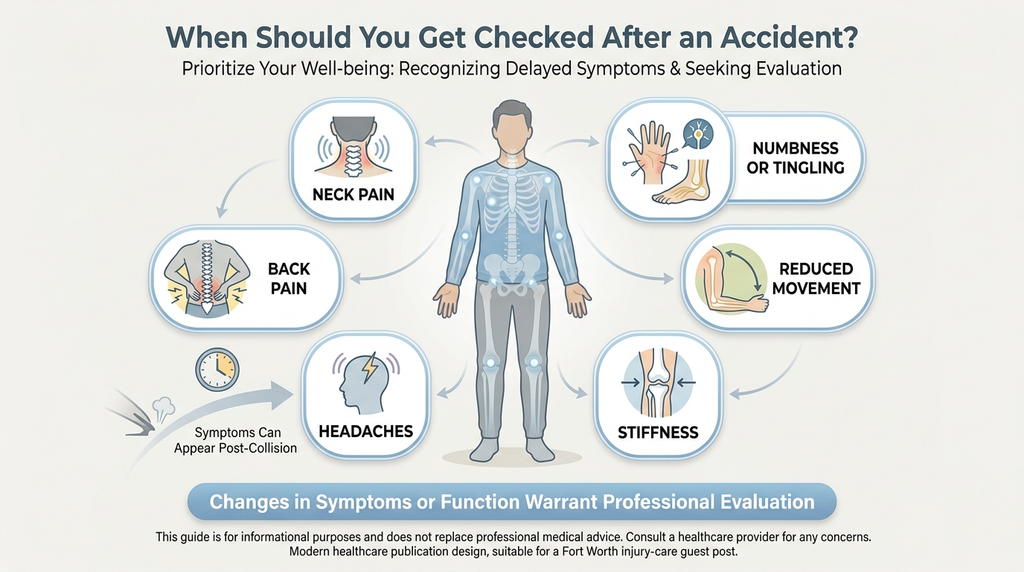
Whiplash symptoms can include neck pain, stiffness, reduced range of motion, headaches, shoulder or upper-back discomfort, and arm tingling or numbness. Mayo Clinic’s guidance on whiplash symptoms notes that symptoms may not appear immediately and can begin within days of an injury.
The NHS information on whiplash similarly notes that symptoms can take several hours to develop following an injury.
So the absence of immediate, severe pain does not necessarily tell you everything about your condition.
If symptoms appear or your normal movement changes after an accident, an evaluation may be worthwhile.
When Should You See an Accident Doctor?
There isn’t one symptom that determines whether you need an evaluation.
Instead, consider the overall picture.
You Develop Neck or Back Pain
Neck and back symptoms are common concerns after collisions.
You may notice:
- Stiffness
- Aching
- Pain with movement
- Reduced range of motion
- Muscle soreness
- Tenderness
- Difficulty maintaining a comfortable position
If these symptoms develop after an accident, especially when they affect normal activities, getting evaluated can help determine what is happening.
Your Symptoms Appear Hours or Days Later
Delayed symptoms deserve attention.
You might leave the accident scene feeling relatively normal, only to notice stiffness that evening or the following morning.
This is one reason Mayo Clinic recommends evaluation for neck pain or other whiplash symptoms after an injury. An evaluation can help rule out broken bones or other problems that could worsen symptoms.
Your Range of Motion Has Changed
Think about movements that were effortless before the collision.
Can you turn your head normally?
Can you look over your shoulder?
Can you bend or rotate your back comfortably?
Can you raise your arm?
A change in range of motion can be an important reason to seek an evaluation, even if your pain level doesn’t seem particularly high.
Mayo Clinic’s whiplash diagnosis guidance notes that an examination can include checking range of motion, tenderness, reflexes, strength, and sensation.
Your Daily Activities Can Tell You Something Important
Sometimes the biggest clue isn’t the pain itself.
It’s what you can no longer do comfortably.
For example, perhaps you can walk normally but cannot sit through your commute without your back becoming uncomfortable.
Maybe you can work at your desk but develop neck stiffness after an hour.
Perhaps you can sleep, but only in one position.
Or maybe turning your head while driving has suddenly become difficult.
These changes provide useful information during an evaluation.
That makes your normal routine part of the story.
Headaches After a Collision Shouldn’t Automatically Be Dismissed
A headache after a car accident can have different possible causes.
It may occur alongside a neck injury, but a collision can also involve a blow or jolt to the head that raises concern for concussion or another traumatic brain injury.
That’s why the context matters.
If you’ve experienced a head injury and develop symptoms such as confusion, memory problems, vision changes, nausea, vomiting, dizziness, or a sudden severe headache, medical evaluation is appropriate. Mayo Clinic’s concussion guidance provides additional information about symptoms following concussion.
Some symptoms require emergency attention rather than a routine appointment.
Know the Emergency Warning Signs
An accident doctor is not the right first stop for every post-crash symptom.
If there are signs of a potentially serious injury, emergency care should take priority.
The CDC’s concussion guidance identifies danger signs following a possible concussion or mild traumatic brain injury that warrant immediate emergency attention. These include a worsening headache that does not go away, repeated vomiting, increasing confusion, unusual behavior, inability to wake up, slurred speech, weakness or numbness, seizures, or loss of consciousness.
Similarly, significant weakness, loss of feeling, difficulty walking, or severe neurological symptoms following a neck injury should not be treated as an ordinary muscle ache. The NHS whiplash guidance advises urgent medical help for symptoms such as weakness in the arms or legs, problems walking or sitting upright, and tingling or pins and needles following a neck injury.
The basic distinction is:
Emergency warning signs → emergency medical care.
New, persistent, or function-limiting symptoms → appropriate healthcare evaluation.
What Happens During an Accident Injury Evaluation?
An evaluation is designed to understand what happened and what has changed.
You may be asked:
- How the accident occurred
- When symptoms began
- Where you feel discomfort
- Whether movement makes symptoms worse
- Whether your range of motion has changed
- Whether you have numbness or tingling
- Whether sleep has been affected
- Whether work has become difficult
- Whether driving has become uncomfortable
- Whether everyday activities have changed
The clinician may also assess movement, tenderness, strength, sensation, reflexes, or other relevant findings depending on the symptoms.
The purpose isn’t simply to assign a pain score.
It’s to build a clearer picture of the injury and determine what should happen next.

Why Getting Evaluated Can Be Useful Even When Symptoms Seem Manageable
An evaluation isn’t necessarily about assuming the worst.
It’s about replacing uncertainty with information.
You may discover that your symptoms are consistent with a relatively straightforward musculoskeletal problem that can be managed conservatively.
You may learn that you need additional medical evaluation.
You may receive guidance about activity, exercise, rehabilitation, or follow-up.
Or you may simply gain a better understanding of what to monitor.
Mayo Clinic’s treatment guidance for whiplash notes that treatment depends on the extent of the injury and may include at-home care, medication, exercise, or physical therapy. Some studies also suggest chiropractic care may ease pain when paired with exercise or physical therapy.
The important part is that the treatment plan should follow the evaluation.
What If You Feel Better After a Few Days?
Improvement is encouraging.
But it doesn’t mean you should ignore symptoms that remain or return when you increase activity.
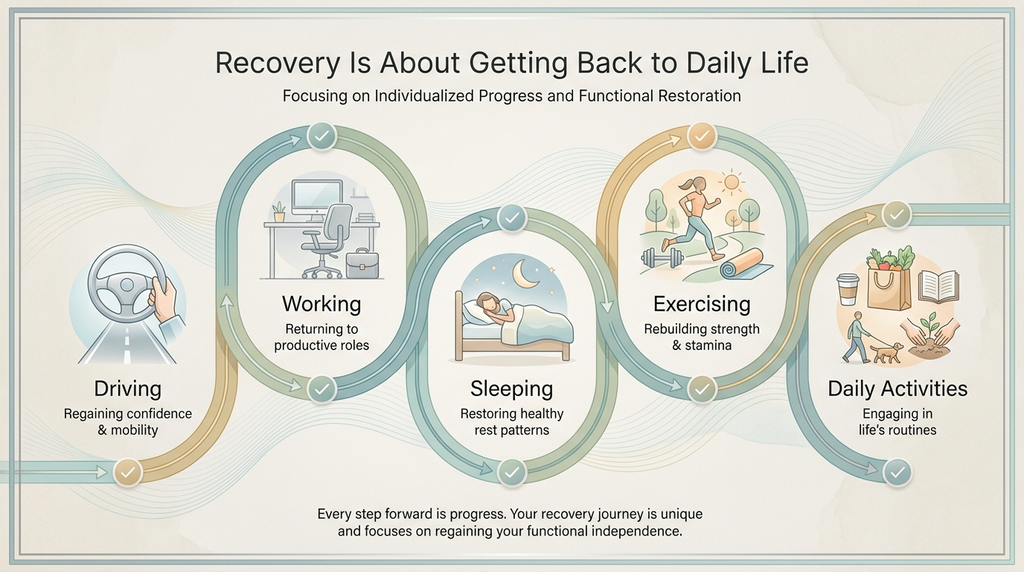
Consider whether you can actually return to your normal routine.
Can you:
- Drive comfortably?
- Turn your head normally?
- Sit through your workday?
- Sleep without significant disruption?
- Walk and move normally?
- Exercise at an appropriate level?
- Complete household responsibilities?
Recovery should be viewed in terms of function as well as symptoms.
If a problem continues interfering with everyday activities, discuss it with an appropriate healthcare professional.
When an Accident Doctor May Be Particularly Relevant
An accident-focused provider may be useful when you have symptoms that began following a collision and need an evaluation tailored to the circumstances of the accident.
This can be particularly relevant when you are dealing with:
Persistent neck or back discomfort
Reduced range of motion
Headaches following a collision
Muscle soreness or stiffness
Pain that increases with movement
Symptoms that developed after initially feeling fine
Difficulty returning to work or normal activities
For people looking for accident-focused care in the Fort Worth area, Fort Worth injury chiropractic care from Premier Injury Clinics of DFW includes chiropractic and rehabilitation-focused services for accident-related concerns and musculoskeletal injuries.
That does not mean every accident requires chiropractic care.
The appropriate treatment depends on the individual’s symptoms, examination findings, and overall medical needs.
What Should You Bring to an Accident Appointment?
You don’t need to diagnose yourself before seeing a healthcare professional.
Instead, bring useful information about what happened and how you’ve been feeling.
It can help to know:
- When the accident occurred
- How the collision happened
- When symptoms first appeared
- Where symptoms are located
- Which movements aggravate them
- Whether symptoms have changed
- Whether sleep has been affected
- Whether work or driving has become difficult
- What medical care you’ve already received
- Any medications or treatments you’ve tried
Being specific can make the conversation more useful.
Instead of saying, “My neck hurts,” explain that you have difficulty turning your head while driving.
Instead of saying, “My back is sore,” explain that the symptoms become worse after sitting for an hour.
Those details help describe the problem’s functional impact.
Don’t Ignore a Symptom Just Because It Isn’t Severe
A symptom doesn’t have to be debilitating to deserve attention.
If something is new after an accident, persists longer than expected, repeatedly interferes with normal activities, or is getting worse, it’s reasonable to discuss it with a healthcare professional.
At the same time, avoid assuming that every post-accident symptom requires the same type of care.
The right approach depends on what is happening.
An appropriate evaluation helps make that distinction.
Choosing an Accident-Focused Provider in Fort Worth
If you’re looking for an accident doctor or injury-focused clinic, consider whether the provider:
- Regularly works with accident-related injuries
- Performs an appropriate evaluation
- Explains the recommended care
- Considers your daily functional limitations
- Provides rehabilitation or mobility-focused care when appropriate
- Monitors your progress
- Recognizes when additional medical evaluation is necessary
You can also ask what happens if your symptoms change during recovery.
A good care plan should account for the possibility that your condition may evolve.
The Bottom Line: When Should You See an Accident Doctor?
You don’t need to wait until your symptoms become unbearable.
If you develop new neck or back pain, stiffness, headaches, reduced range of motion, numbness, or other symptoms after a collision, an appropriate healthcare evaluation can help determine what is happening.
If symptoms are affecting your driving, work, sleep, exercise, or other normal activities, that’s another reason to have them assessed.
And if you experience serious warning signs such as worsening headache, repeated vomiting, confusion, seizures, loss of consciousness, significant weakness, or numbness, seek emergency medical care rather than waiting for a routine appointment. The CDC’s patient guidance for concussion and traumatic brain injury provides additional information about emergency warning signs.
For people in the Fort Worth area who need accident-focused care, Premier Injury Clinics of DFW’s Fort Worth injury chiropractic clinic offers chiropractic and rehabilitation services for accident-related injuries.
Ultimately, seeing an accident doctor isn’t about assuming something is seriously wrong.
It’s about knowing what changed, understanding your options, and getting appropriate guidance for the road back to normal activity.